 Sophie TaylorVIEW PROFILE →
The Other Moon Race: How China Is Quietly Staying on Track to Land Astronauts by 2030
While much of the Western space conversation has focused on NASA's repeatedly delayed return to the Moon, China's own lunar programme has been advancing with quiet, methodical determination. The China Manned Space Agency says its 2030 crewed landing goal remains on pace, backed by a steady drumbeat
While much of the Western space conversation has focused on NASA's repeatedly delayed return to the Moon, another lunar programme has been advancing with quiet, methodical determination on the other side of the world. China is steadily working toward landing its own astronauts on the lunar surface before the end of this decade.
A 2030 Deadline, and On Pace
According to the China Manned Space Agency, the country's ambitious goal of a crewed Moon landing by 2030 remains firmly on track. The agency has reported that its key hardware projects are progressing smoothly, a claim that is increasingly backed up by a steady and public drumbeat of successful engineering tests.
That timeline is genuinely significant. If China succeeds, it would become only the second nation in history to place humans on the Moon, more than half a century after the Apollo programme, and it would do so at a moment when America's own planned return has faced a series of frustrating schedule slips.
The Hardware Taking Shape
At the heart of the Chinese effort sits a trio of newly developed vehicles, each with its own name and distinct role. The Long March 10 is the powerful carrier rocket, the Mengzhou is the crewed spacecraft that will ferry the astronauts, and the Lanyue is the lander designed to carry them down to the surface itself.
The mission architecture is elegant in its underlying logic. Two separate Long March 10 rockets would launch, sending the Mengzhou spacecraft and the Lanyue lander into lunar orbit independently. There, the two craft would dock together, allowing the astronauts to transfer into the lander before descending to the Moon.
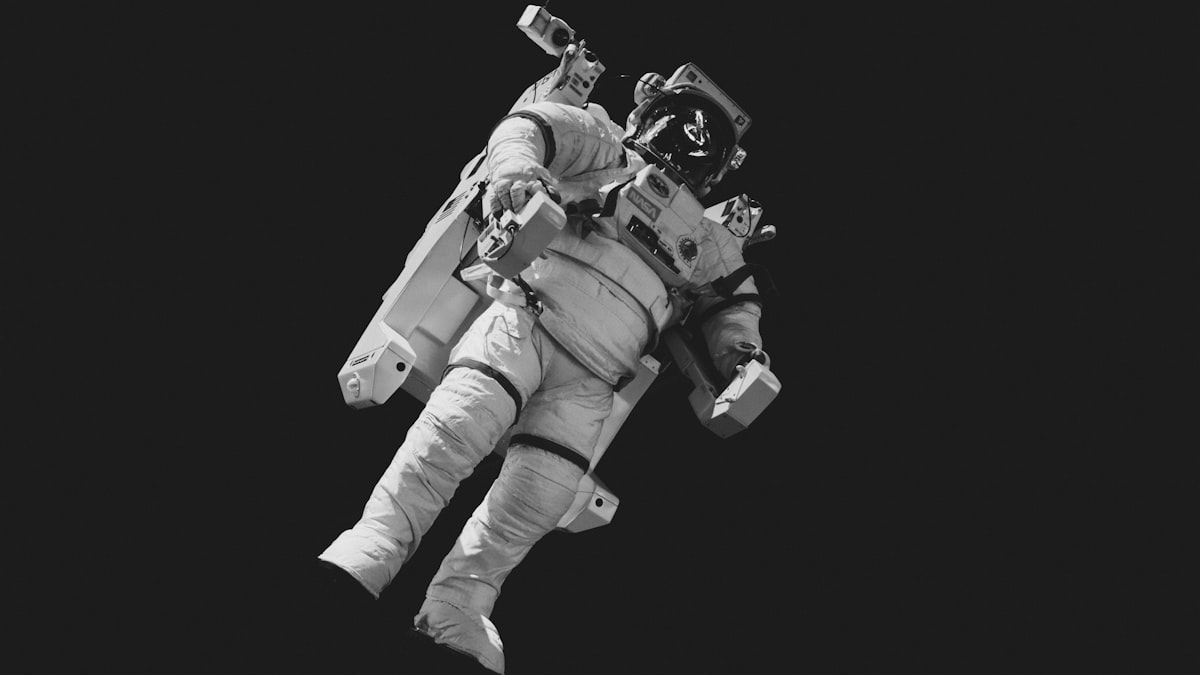
The list of purpose-built equipment goes well beyond just rockets and capsules. China has also developed the Wangyu lunar spacesuit for moonwalks and the Tansuo crewed rover, intended to let astronauts range across the surface, echoing the buggies of the Apollo era but built with distinctly modern technology and materials.
A Drumbeat of Tests
What separates ambition from reality in spaceflight is rigorous testing, and here China has been remarkably busy. Preliminary prototyping of the core flight hardware, spanning the rocket, spacecraft, lander, spacesuit and rover, was reported as completed, laying the groundwork for the far more demanding trials that followed.
Among the milestones already ticked off is a zero-altitude abort flight test for the Mengzhou spacecraft, a crucial safety check designed to prove that the crew could escape in an emergency while still on the launch pad. Such tests are deeply unglamorous but absolutely fundamental to any human spaceflight programme.
The lander has been put through its paces too, with an integrated landing and take-off test for the Lanyue confirming that it can both set down gently and lift off again afterwards. The Long March 10, meanwhile, has undergone tethered ignition tests as well as a low-altitude demonstration of its complex systems.
Perhaps most telling of all was a high-speed abort test of the Mengzhou spacecraft conducted under maximum aerodynamic pressure, the punishing moment during ascent when a rocket endures its greatest structural stress. Passing that test suggests the escape system can protect a crew during the single most dangerous phase of the flight.
A New Space Race Takes Shape
Taken together, these developments paint a picture of a programme moving forward with disciplined confidence rather than flashy spectacle. Chinese officials have framed the effort in notably stark terms, vowing to spare no effort in the pursuit of a goal that clearly carries enormous national prestige and symbolism.
For observers in Australia and right around the world, the implications are considerable. A successful Chinese landing would reshape the geopolitics of space, potentially sparking a renewed lunar race and accelerating everyone's plans, from crewed missions to the long-term dream of permanent bases near the lunar south pole.
Nothing in spaceflight is ever truly guaranteed, and years of complex, high-stakes testing still lie ahead before any Chinese astronaut actually sets foot on the Moon. Yet the steady, methodical progress on display makes one thing clear: the race back to the Moon is no longer a one-horse contest, and the finish line is now firmly in sight for more than a single nation.